Archive Management
Retention Focused
Storage Operations
Store inactive data for future needs.
Long Term
RETENTION
Archived
DATA SETS
On Demand
RETRIEVAL
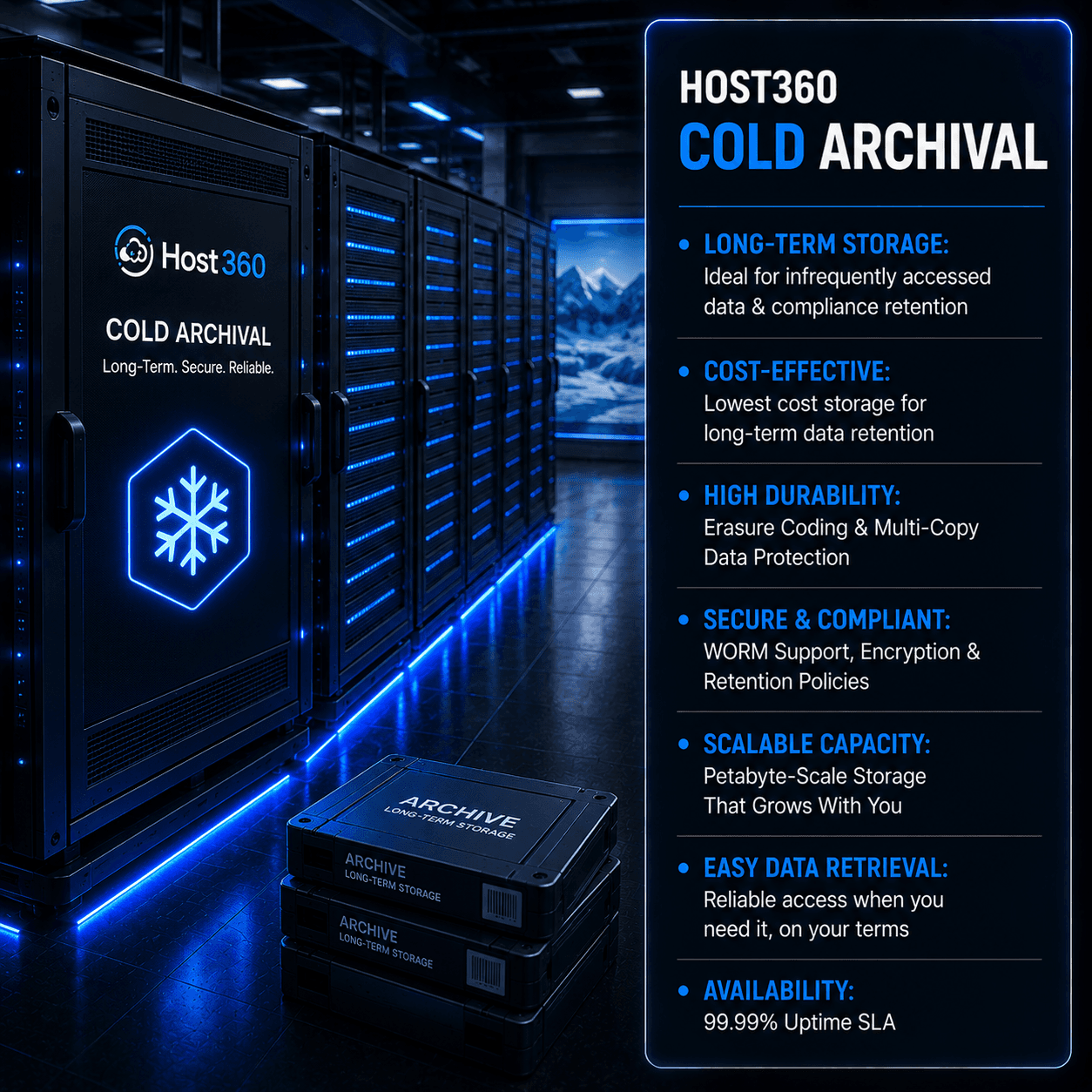
Host360 Cold Archival Storage provides cost-efficient long-term data retention for backups, compliance records, historical datasets, and inactive business information that requires durable storage rather than frequent access.
From early-stage AI startups to Fortune 500 R&D labs.
STORAGE CHARACTERISTICS
Cold Archival Storage is intended for data that must be retained for extended periods while remaining accessible when required. It supports retention-focused storage strategies for compliance, governance, historical records, and inactive datasets.
Archive inactive data, records, and historical information while maintaining organized retention and retrieval workflows.
Support long term record preservation requirements.
Maintain backup data beyond operational periods.
Preserve valuable datasets for future reference.
Retain organizational information efficiently.
Maintain backup data beyond operational periods.
Archival Capabilities
Built for retention focused storage needs.
Store inactive data for future needs.
Retain records for extended periods.
Maintain stored data consistency.
Organize historical information.
Support archive retention plans.
ARCHIVAL WORKFLOW
Move inactive information into a long-term storage tier through a structured archival process.
Different archival requirements demand different retention and retrieval strategies. Select the model that aligns with your business objectives.
| Feature | Regulatory Retention Compliance Archives Maintain records for audit and compliance needs. Contact Sales Retention Focused | Long Term Backup Storage Backup Archives Retain historical backup copies efficiently. Contact Sales Recovery Retention | Research & Business Archives Historical Data Preserve datasets and organizational history. Custom Quote Reference Data |
|---|---|---|---|
| Primary Purpose | Regulatory Retention | Backup Preservation | Historical Reference |
| Typical Content | Audit Records | Backup Copies | Legacy Datasets |
| Retention Basis | Policy Requirements | Recovery Requirements | Business Requirements |
| Access Pattern |
ARCHIVE RESOURCES
Learn about storage services and retention strategies that complement long-term archival storage.
DATA PROTECTION
Retain backup copies before archiving.
STORAGE
Store large volumes of unstructured data.
COMPLIANCE
Understand long-term retention practices.
GOVERNANCE
Organize and manage archived records.
OPERATIONS
Manage data from creation to archive.
INFRASTRUCTURE
Choose the right storage tiers.
FREQUENTLY ASKED QUESTIONS
Learn how archival storage supports long-term data retention, governance requirements, and historical data preservation.
Cold archival storage is a storage tier designed for data that must be retained for extended periods but is accessed infrequently. It is commonly used for archives, historical records, and long-term retention requirements.
Organizations typically use archival storage when data is no longer actively used but must be preserved for compliance, governance, research, operational history, or future reference.
Archived data may include compliance records, audit documents, historical backups, completed project files, research datasets, financial records, and business archives.
Primary storage is designed for active workloads and frequent access, while archival storage is intended for long-term retention of inactive data that is accessed occasionally.
Yes. Archived data remains available for retrieval, although access patterns and retrieval times may differ from active storage services.
Archival storage is commonly used as part of broader compliance, governance, and record retention strategies where long-term preservation of information is required.
We reply within 2 hrs · IST business hours
Archive historical records, backup copies, and inactive datasets in a storage tier designed for long-term retention and future accessibility.
| Rare Access |
| Infrequent Access |
| Data Lifecycle Stage | Archived Records | Retained Backups | Historical Assets |
| Primary Stakeholders | Compliance Teams | IT Operations | Research Teams |
| Storage Objective | Record Preservation | Recovery Readiness | Knowledge Retention |