Traffic Control
Centralized Request
Distribution
Route requests across backend resources.
Centralized
ROUTING
Multiple
ENDPOINTS
Dynamic
TRAFFIC FLOW
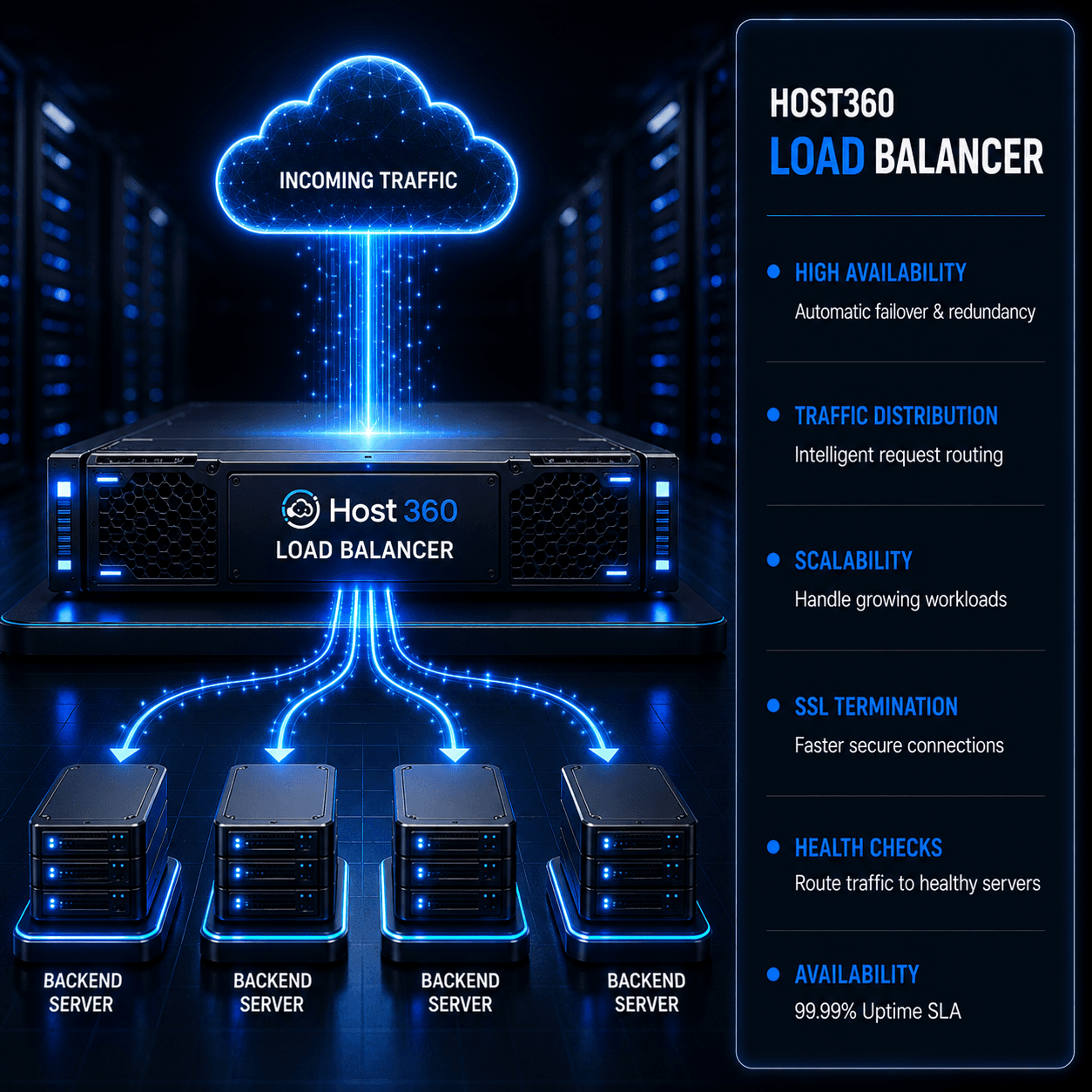
Host360 Load Balancer distributes incoming application traffic across multiple backend resources to support workload distribution, service availability, and efficient request handling for cloud applications.
TRAFFIC MANAGEMENT SPECIFICATIONS
Host360 Load Balancer distributes incoming requests across backend resources and provides centralized traffic routing for cloud applications and services.
Route application requests efficiently across cloud resources and services through centralized traffic management.
Distribute incoming traffic across application resources.
Centralize traffic management for service requests.
Route requests across available resources.
Simplify access to internal application resources.
Centralize traffic management for service requests.
Traffic Management
Distribute and manage application requests.
Route requests across backend resources.
TRAFFIC DEPLOYMENT
Configure traffic distribution for applications and services through a structured deployment workflow.
Different application architectures require different traffic management models. Select the approach that best fits your workload requirements.
| Feature | Internet Facing Traffic Public Applications Route requests from external users. Contact Sales External Access | Private Traffic |
|---|
TRAFFIC MANAGEMENT RESOURCES
Discover networking and application delivery services that complement load balancing deployments.
FREQUENTLY ASKED QUESTIONS
Learn how load balancers distribute traffic, support application delivery, and simplify traffic management across cloud environments.
A load balancer is a service that distributes incoming application requests across multiple backend resources to manage traffic flow and application access.
Load balancers help organizations manage incoming traffic efficiently by directing requests to available application resources.
Load balancers are commonly used for web applications, APIs, business platforms, SaaS applications, and internal services.
Yes. A load balancer can distribute requests across multiple application instances, virtual machines, containers, or services.
Yes. A load balancer acts as an intermediary layer that receives requests and forwards them to appropriate backend resources.
Yes. Load balancers are commonly used in environments where applications run across multiple resources and require centralized traffic management.
We reply within 2 hrs · IST business hours
Route requests across application resources through a centralized load balancing service designed for modern cloud workloads and business applications.
Forward requests to target resources.
Spread traffic across resources.
Direct traffic to active endpoints.
Present multiple resources as one.
| Shared Traffic Layer Multi Service Platforms Support multiple application services. Custom Quote Platform Scale |
|---|
| Primary Traffic Source | Internet Users | Internal Systems | Multiple Applications |
| Traffic Scope | External Requests | Service Requests | Mixed Workloads |
| Typical Workloads | Websites | Business Systems | SaaS Platforms |
| User Access |
SECURITY
Filter and inspect web traffic.
| Restricted Access |
| Shared Access |
| Request Destination | Application Servers | Internal Endpoints | Service Groups |
| Architecture Focus | User Traffic | Service Connectivity | Platform Operations |
| Operational Goal | Application Delivery | Service Communication | Traffic Consolidation |